


On September 18, Riot banned two cards from the trading card game Riftbound with immediate effect, out of Standard and Constructed 2v2: "Stacked Deck" and "Ekko, Recurrent".
The effect on the card market didn't take long to show up – and it isn't limited to the US market. A look at European Cardmarket data shows just how strong the movement really is.
Why Riot banned the two cards
According to Riot's official announcement, "Stacked Deck" got hit for its consistency: combined with "Lightning Rush", the card reliably found exactly the pieces Kennen decks need – a problem Riot says had compounded since the Kennen legend's release.
"Ekko, Recurrent" got hit for a different reason: the card effectively granted an extra turn with very little room for the opponent to interact – a play pattern Riot deemed unhealthy, even though the card saw little tournament play.
The timing wasn't a coincidence: the Regional Qualifier in Los Angeles started a week after the announcement, the same day Riftbound launched in South Korea.
RunItDown (@RunItDownDE) on X
Never miss a beat: Follow us on X for League of Legends updates – news, analysis and results straight from the newsroom.
 RunItDown

Stacked Deck crashes – on both sides of the Atlantic
On Cardmarket, Europe's largest marketplace for Riftbound singles, the crash of "Stacked Deck" can be tracked directly.
- The regular Origins print of the card held steady at four to five euros through mid-September, then dropped sharply starting September 15 to 18, and has been hovering around one euro since – a decline of roughly 75 percent against the 30-day average.
- The promo print shows the same movement, just at a higher starting level: from five to seven euros down to around two euros currently.
Who benefits from the ban
With "Stacked Deck" out of the format, Purple decks – Kennen above all, but also Ezreal, Diana, Mel, Sivir, and Aurora – need to find their consistency elsewhere. That's driving demand for alternative cards, and it shows up in prices on both markets.
According to cardsrealm, several cards gained in the days after the ban: "LeBlanc, Deceiver" (Overnumbered print) up eight percent to 195.50 US-Dollars, "Mirror Image" up 22 percent to around twelve US-Dollars, and "Dazzling Aurora" up eleven percent to around 44 US-Dollars.
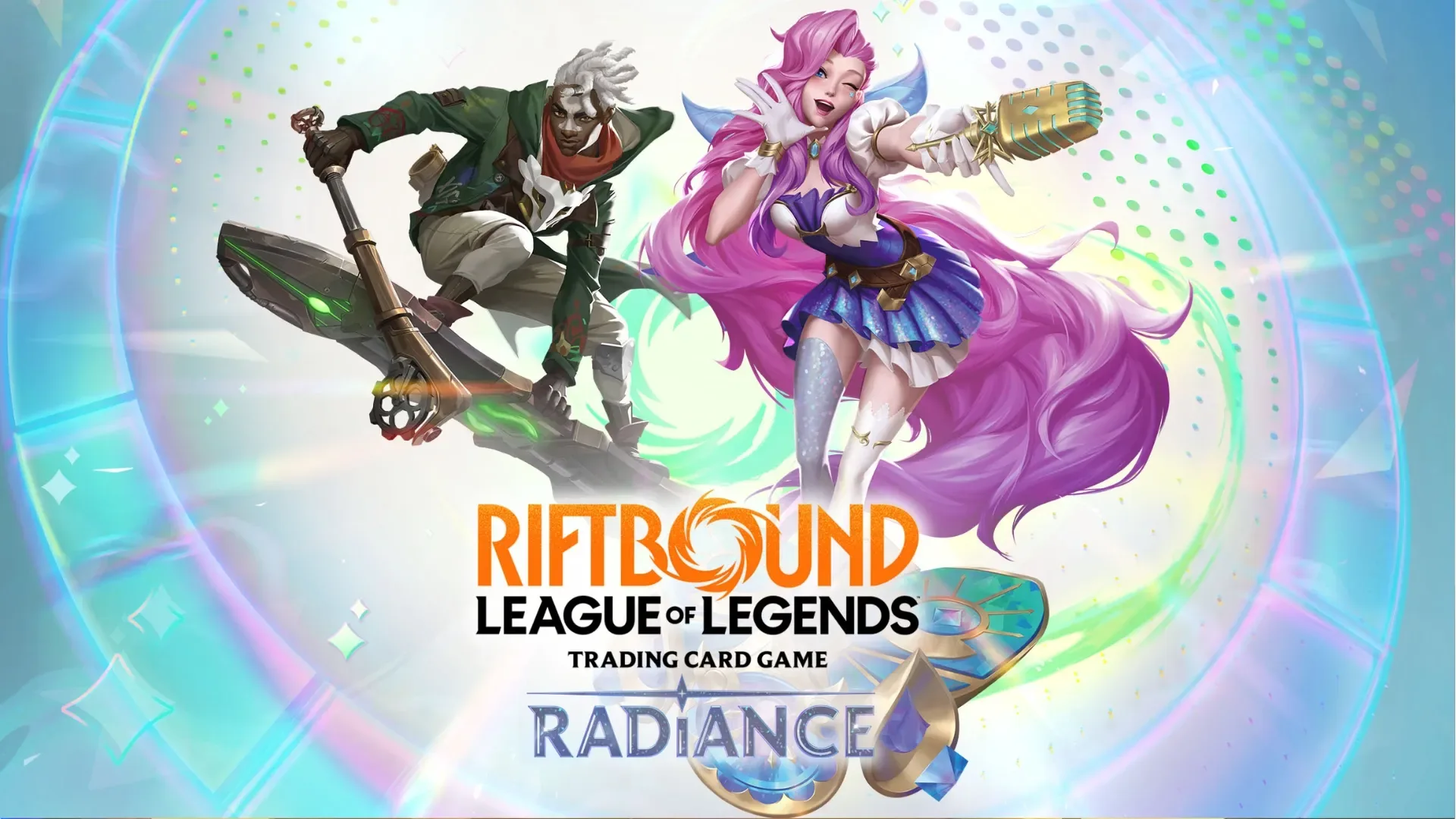
Riftbound: Radiance preview season kicks off – Ekko, Seraphine, Evelynn and more
Starting September 25, Riot begins revealing cards from »Riftbound Radiance«, the trading card game's fifth set. Nine new Legends, a new Ultimate Rare tier, and a worldwide release on October 23 – here's the overview.
RunItDown
Our own Cardmarket check confirms the direction independently of the US numbers – with sometimes notably different absolute values, since the two marketplaces don't always trade the exact same card version:
- Dazzling Aurora (Origins) has climbed on Cardmarket from around 22 to about 27 Euros since early September.
- Mirror Image (Unleashed) shows the most striking curve in the whole dataset: from around eight Euros in mid-September up to a peak of 18 Euros.
- Blade of the Ruined King and Divine Judgment moved up more moderately. There were individual outliers, though – Divine Judgment briefly spiked to 7.50 Euros.
For "Kha'Zix, Mutating Horror" and the Vendetta print of "Ezreal, Prodigy", the Cardmarket charts show a dip around mid-September followed by a recovery – close in time to the ban, though that doesn't necessarily mean there's a direct connection.